

General Media Contact
If you are a member of the media with an inquiry or other request, please call during regular business hours or email: press@nyccfb.info | 212-409-1800
Originally published by the CUNY Institute for State & Local Governance on October 22, 2026.
By: Molly Dektar, Senior Communications Associate, CUNY ISLG, and Jadel Munguia, Assistant Press Secretary, New York City Campaign Finance Board

Leading up to New York’s general elections, Civic Engagement Fellows and their host sites share personal reflections on the state of civic engagement in the South Bronx
All across the South Bronx, from swim and dance classes, to soccer games and summer camp, in classrooms and on the street, a group of CUNY recent graduates are talking with potential voters. The conversations are taking place in English and Spanish, with youth too young to vote and their parents, with those highly engaged with local politics, and with those who are more cynical. This person-to-person connection serves an important goal: raising registration and turnout rates in this diverse and historically underserved part of the city.
This person-to-person connection serves an important goal: raising registration and turnout rates in this diverse and historically underserved part of the city.
The Bronx has the lowest voter registration rate of NYC’s boroughs. It also has the lowest turnout rate: in 2025, the citywide turnout rate was 41.6 percent, and the Bronx turnout rate was 30.3 percent. The Civic Engagement Fellowship was created to boost these numbers. Developed by the New York City Campaign Finance Board (CFB) in partnership with CUNY ISLG, the two-year Fellowship trained and embedded a group of CUNY students—now graduates—into South Bronx community organizations to work on voter registration, voter turnout, and civic engagement education. In line with CFB research that shows people under the age of 30 are the least likely to vote, many of the Fellows work with groups serving young people.
Early voting opens on Saturday, October 24th, giving New Yorkers the chance to cast their ballot for important state and federal offices, including governor, attorney general, comptroller, state legislators, and more. As voters prepare to head to the polls, our Civic Engagement Fellows and their host site managers are sharing the lessons they’ve learned from their work on the ground.
Reaching Voters
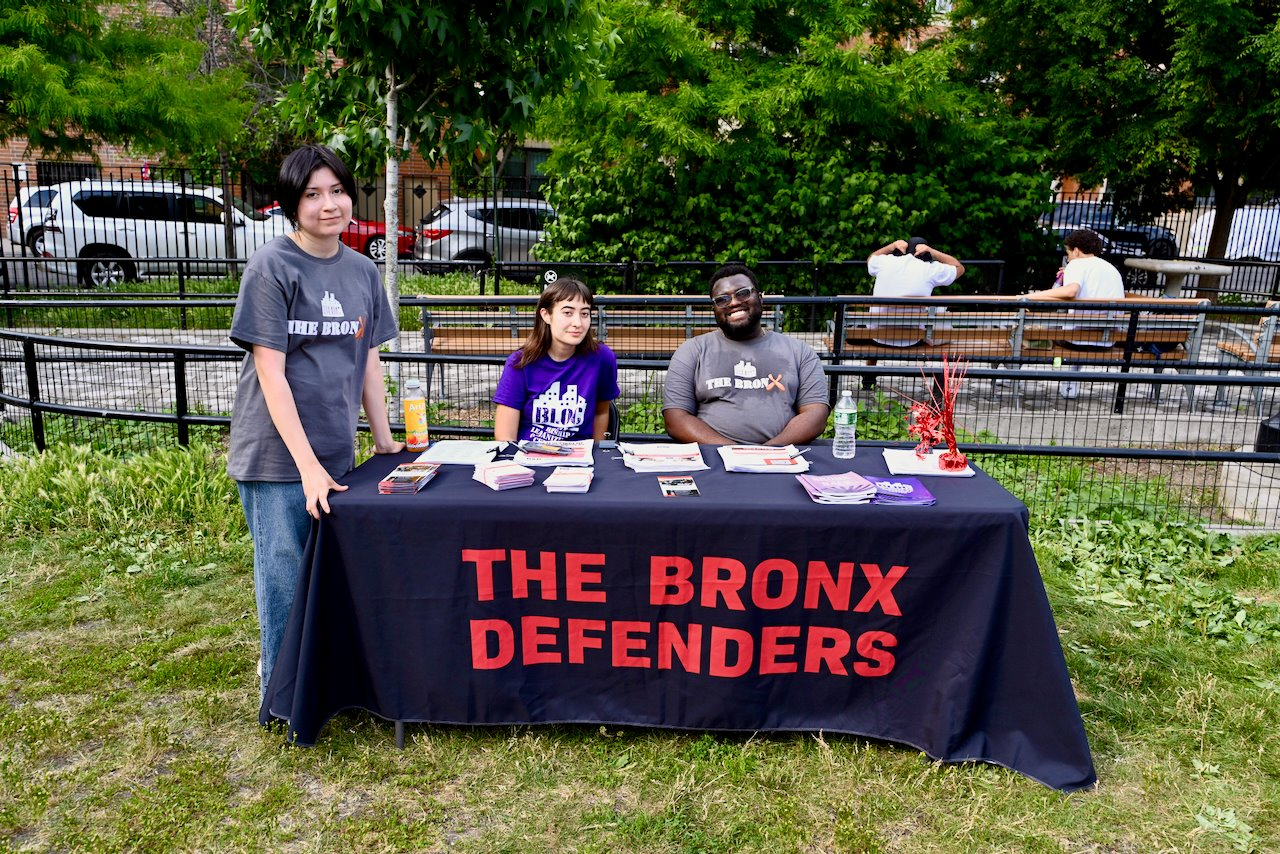
 Leading up to the primaries in June 2026 and now again in November as the 2026 general election approaches, our Fellows have fanned out across the South Bronx to meet potential voters where they are. "There will always be a voter registration table whenever I’m at an SBU event,” said Cecilia Castellon, a Fellow at South Bronx United (SBU). SBU focuses on building leadership and opportunity through soccer, community events have included World Cup parties, soccer tournaments, and camps, among others. Even if the youth that SBU serves are not yet eligible to vote, the parents may be: “I usually help the parents out—if they’re first-time voters, it’s very important to just circle the important information needed so that it’s easier for them.”
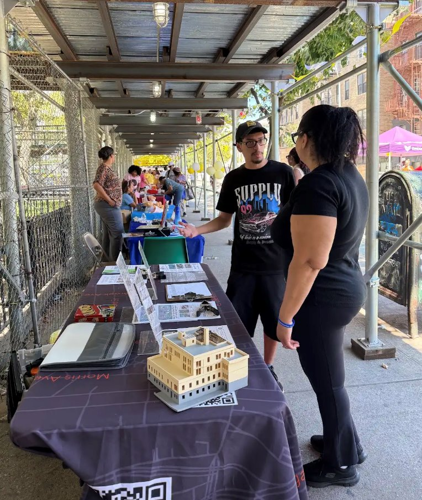
Angelina Tizzano, a Fellow based at New Settlement—a settlement house offering a range of programs for Bronx families—has used the same strategies while tabling or leading workshops for New Settlement. “If someone is not interested [in voting], maybe somebody in the household could be interested,” she said. “So, we give a follow-up resource that they could take home with a hotline and voting websites for more information.”
What works for engaging the broad spectrum of potential voters? According to Tizzano, it’s “important to start with a conversation, instead of immediately asking someone to register to vote. Asking what issues matter to them or explaining how civic engagement connects to things they experience in their own community, can make the conversation way more meaningful. Voter outreach isn’t just about handing someone a registration form.”
Fellows and their host sites make it clear to New Yorkers that voting can move the needle on topics close to their hearts. “It's really important for folks to know that voting is one way to make your voice heard in a city where there's a lot of noise and a lot of differing opinions,” said Mariel Charles, Division Director of Organizing at New Settlement. “And most people have an opinion about improving their day-to-day lives.”
It's really important for folks to know that voting is one way to make your voice heard in a city where there's a lot of noise and a lot of differing opinions.
Across host sites, Fellows emphasized the need for Spanish-language materials as well as English-language ones, to reach people who may have felt alienated from the process before. 57 percent of Bronx residents identify as Hispanic or Latino.
Conversations eventually turn towards the sharing of crucial logistics: Did you know you can vote early in New York City starting on October 24th? Do you know your poll site? And at the same time, information that goes beyond the immediate election at hand: Did you know that you can preregister to vote when you’re sixteen? Did you know that even if you’re too young to vote, or not eligible, you can still make your voice heard?
What matters to residents of the South Bronx
 Certain topics are particularly relevant to potential South Bronx voters. Castellon taught at SBU’s five-week Summer Soccer Scholars program, where she invited students to go into depth on policy proposals that they felt passionate about, such as immigration, gun safety, and homelessness. “What’s going on in federal policy has a lot of side effects in our community, the immigrant community,” explained Andrew So, Executive Director of SBU. “People are thinking about what they can do to keep each other safe and looking out for their families and their community members.
At New Settlement, Charles has worked to add civic engagement to the organization’s already trusted program of community supports. “Families can get some food from a food pantry; an older son is going to the College Access Center to get SAT prep; an aunt or uncle who's facing an eviction proceeding goes to CASA for legal support; and they also know that they can come to New Settlement to find out everything about how to be civically engaged,” she said. This kind of integration into wraparound services serves to counteract what Tizzano described as her main challenge in civic engagement: “Distrust around elections and government.” The Fellows work to counteract frustration or apathy in their one-to-one conversations.
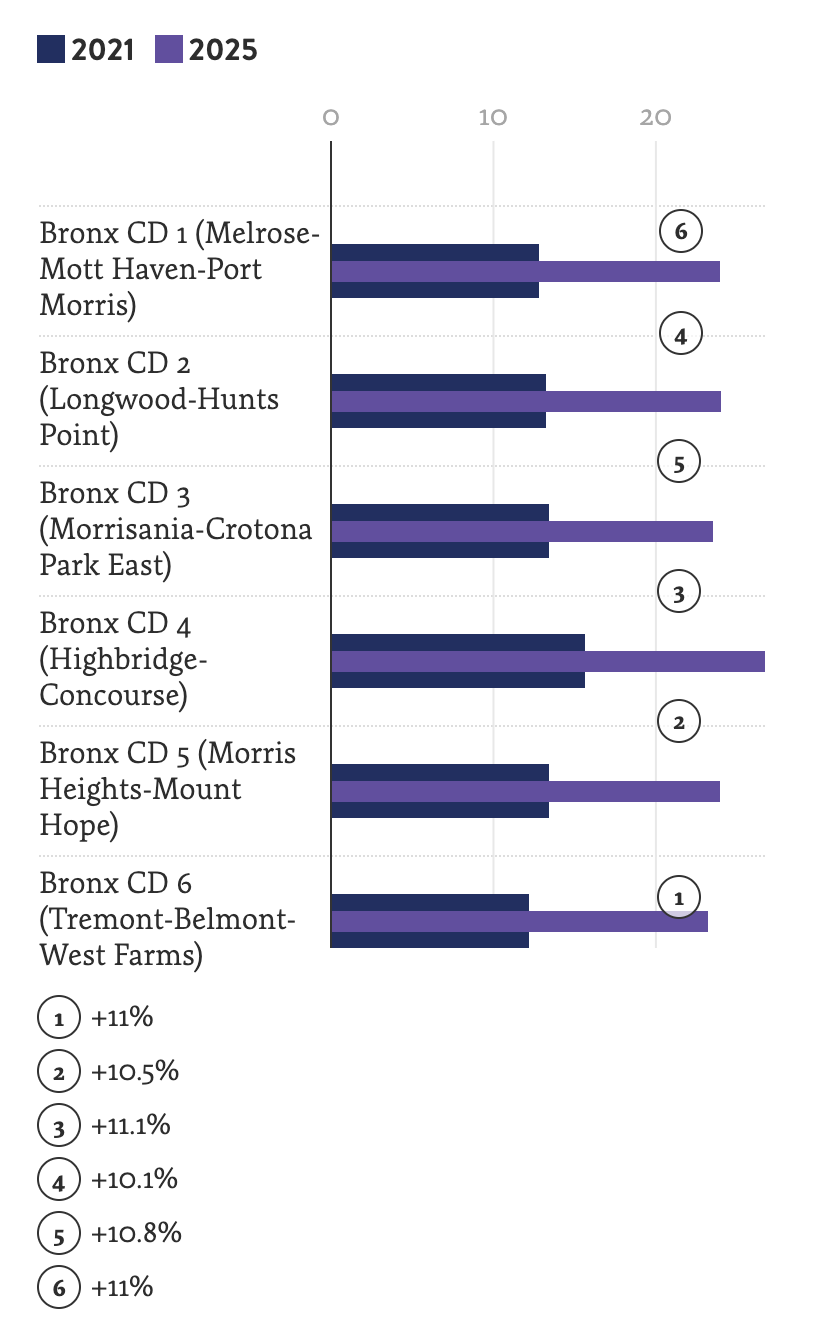
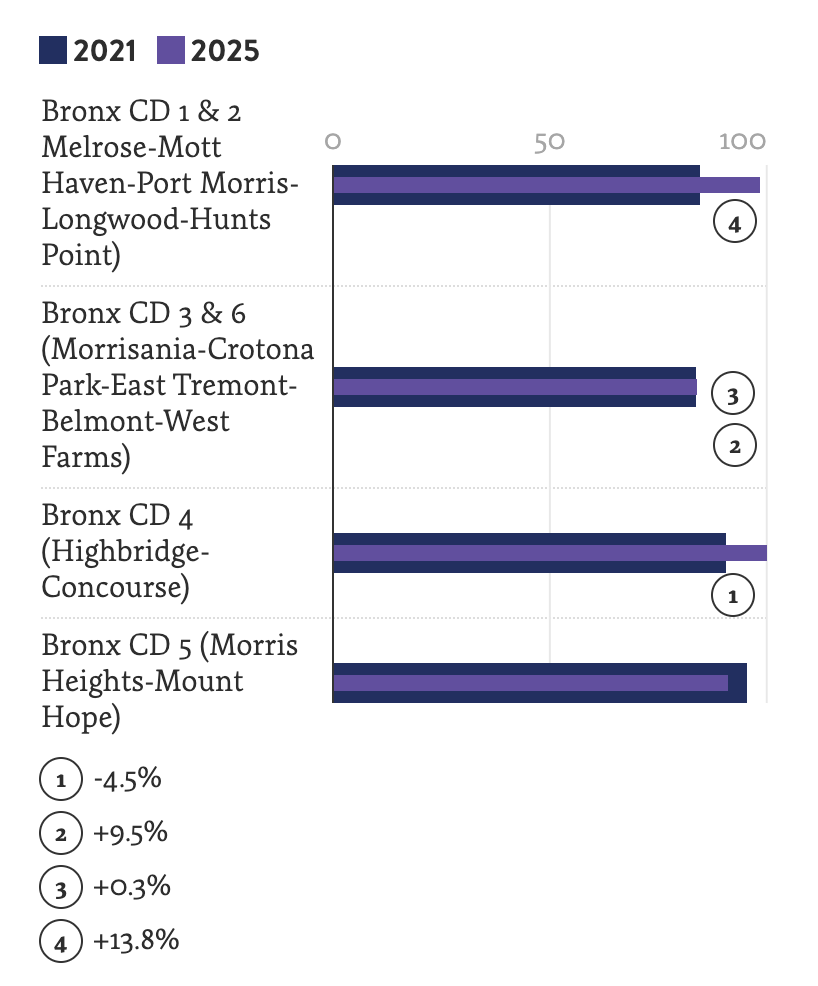
Voter registration in the South Bronx has increased since the 2021 mayoral election.
Beyond the Election Cycle
2025 was a banner year for civic engagement in New York City. The elections led to citywide double-digit percentage point increases in turnout compared to 2021. In the Bronx, turnout was up by 13 percentage points.
There are high-profile election years; there are low-profile election years; and then there are years, like 2027, where there are no major scheduled elections in New York City. But the work of civic engagement—and the Civic Engagement Fellowship—continues. “Last year helped to get young adults, teens to late 20s, highly engaged,” So said. “I’m excited about keeping that going.”
Castellon noted that as SBU serves a population of mostly immigrant families, “I try to reassure them that there are ways to get involved within civics, not just the elections.” This includes through The Civic Engagement Commission’s participatory budgeting initiative The People’s Money. Tizzano explained that she and other Fellows often strategize and collaborate on events or tabling. These collaborations allow for energetic outreach and cross-pollination across different communities in the Bronx.
Ultimately, civic engagement isn’t just about voter turnout but about creating lasting empowerment. Tizzano commented, “Doing civic engagement is really meaningful work. We want to be there for people, have people participate, have people feel like a part of the community.”
Voter turnout in the South Bronx increased by over 10 percent since the 2021 mayoral election.